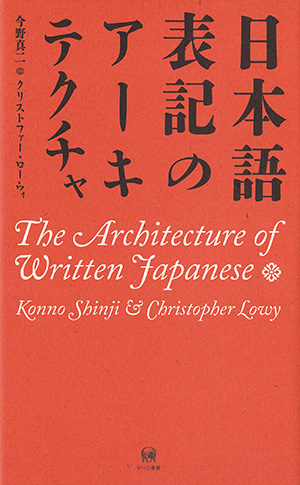
chapter 01: Introduction and Some Goals
Introduction
Writing, Orthography, and an Architecture of Written Language
第01章:かきことばのアーキテクチャ
書き手・読み手・観察者
かきことば
chapter 02: The Architecture of Script
Architecture and Writing Systems
The Architecture of Written Japanese: Eight Major Elements
第02章:日本語アーキテクチャの要素
基本的な文字種:漢字・片仮名・平仮名
符号
書字方向
文字の大きさ
振仮名の可能性
Base Text
かきことばの互換性
漢字体系の拡張性・開放性
chapter 03: Three Character Sets: Sinographs, Hiragana, Katakana
Sinographs, Hiragana, Katakana
第03章:3つの文字体系
漢字と仮名
平仮名と片仮名
表記体
chapter 04: Punctuation Marks, Typographical Symbols, Diacritics
Small Things(in English)
Small Things(in Japanese)
第04章:符号の諸相
促音・半濁音をあらわす符号
†と*
鉤括弧
傍線
chapter 05: The Orientation & Direction of Written Characters
The Directional Orientation of Characters
Mirror Writing
The Direction of Writing
Line Awareness
第05章:文字の方向
文字の向き
鏡文字(反文・反書)
書字方向
行の意識
chapter 06: The Size of Characters
(Not) Thinking Outside the(Imaginary) Box
Size and the Question of Style
第06章:文字の大きさ
chapter 07: The History of Furigana
A Brief Translator’s Introduction
The History of Furigana: Introduction, or Can a Snowman Have a History?
Readings and Furigana
Are Furigana Used in Diaries?
The Handwritten Manuscript of Ningen Shikkaku
A Journey into the History of Furigana
chapter 08: The History of Furigana: Contemporary Uses
What Are Furigana?
Furigana in the Lyrics of Southern All Stars
Who Reads Lyric Sheets?
A Multitude of Possibilities in Written Japanese
“I Want to Write in Sinographs!”
Two Languages
Furigana-as-Readings
Limited Sinograph Usage and the List of Sinographs in Common Use
Furigana-as-Expression
chapter 09: The History of Furigana: Its Use in Literature Today
Furigana in Contemporary Fiction
Can Japanese Be Written Without Furigana?
Furigana and Dialect: The Case of the Kirikiri Language
Inoue Hisashi’s “Considering the Advantages and Disadvantages of Furigana”
When Special Word-Forms Become Furigana
Sinographs Connecting Two Word-Forms
Words Written in Katakana
第07章:江戸期の振仮名
第08章:明治期の振仮名
第09章:振仮名の可能性
2種類の文字・2つの言語
振仮名が示唆すること
chapter 10: The Base Text
The Ubiquity of the Base Text
The Limits of the Base Text
Why Possibilities Matter
第10章:Base Text
chapter 11: Interchangeability
Interchangeability and the Text-World
“Non-Choosing” and the Creation of a Text-World
第11章:かきことばの互換性
chapter 12: Sinographs as an Open Character Set
Alphabets as Closed Character Sets
Sinographs: An Open Character Set?
From “Sinograph” to “Sinograph-like”
Sinographs: Never a Closed Set
第12章:漢字体系の拡張性・開放性
chapter 13: The Visual Representation of Language in Literary Texts
Enter the Text-World
Grapholinguistics
第13章:文学テキストにおける文字表現
chapter 14: The Distance Between Spoken and Written Language
Section 01: In the Beginning was the Sinograph
Section 02: The Visual Representation of Language in/for/by Literature
Section 03: Who Reads, Who Writes?
Some Concluding Remarks